Open 24/7 Same rate nights, weekends & holidays No overtime fees 4.6 on Google · 282 reviews Call or text (240) 969-4911
Furnace Repair in Winchester, VA

Based in Leesburg, VA

4.6 from 282 Google reviews

Furnace Repair in Winchester, VA

Furnace repair in Winchester, VA for gas, propane and oil systems, handled by licensed technicians 24/7 at the regular rate.

Call or text (240) 969-4911

Request an estimate

Tell us what you need

No obligation · Responds within 1 business day


By submitting this form you agree that we may contact you about your request and share your name and email address with partner companies for email marketing. We never share your mobile number or text message consent with third parties or affiliates for marketing or promotional purposes.

Keeping Winchester Warm Through Valley Winters

Brick Street Plumbing Heat & Air provides furnace repair Winchester, VA homeowners can call for at any hour, and a late-night or weekend visit carries no overtime fee. Our licensed HVAC technicians work on natural gas, propane, oil and electric furnaces. They trace the problem through the thermostat, ignition, burners, blower and safety controls, explain what failed in plain language, and give you the repair price before any work begins. Most no-heat calls are resolved by replacing one failed part.

Winters in the northern Shenandoah Valley bring cold snaps and wind that test a heating system. In Winchester's older neighborhoods, many homes were built long before forced-air heat and have been converted over the years from coal, oil or radiators. Out in Frederick County, propane and oil are common where natural gas lines do not reach. That variety means the right diagnosis starts with knowing what you have, so tell us your fuel type when you call. Our Winchester page lists our other local services.

Heating Problems by Fuel Type

Each kind of furnace has its own common failures.

Natural Gas Furnaces

Igniters, flame sensors, inducer motors and pressure switches top the list. These repairs are routine once the fault is confirmed.

Propane Furnaces

Same basic design as gas, with propane-specific valves and orifices. Low tank levels and regulator problems can mimic a furnace failure, so we check supply first.

Oil Furnaces

Clogged nozzles and filters, a weak fuel pump, or a dirty combustion chamber cause most oil-fired breakdowns. Soot buildup is a sign of poor burn.

Electric Furnaces and Heat Pumps

Failed heating elements, sequencers and breakers are common. If a heat pump is the main heat source, we check the backup strips too.

HOW WE WORK

What Happens During a Winchester Furnace Repair

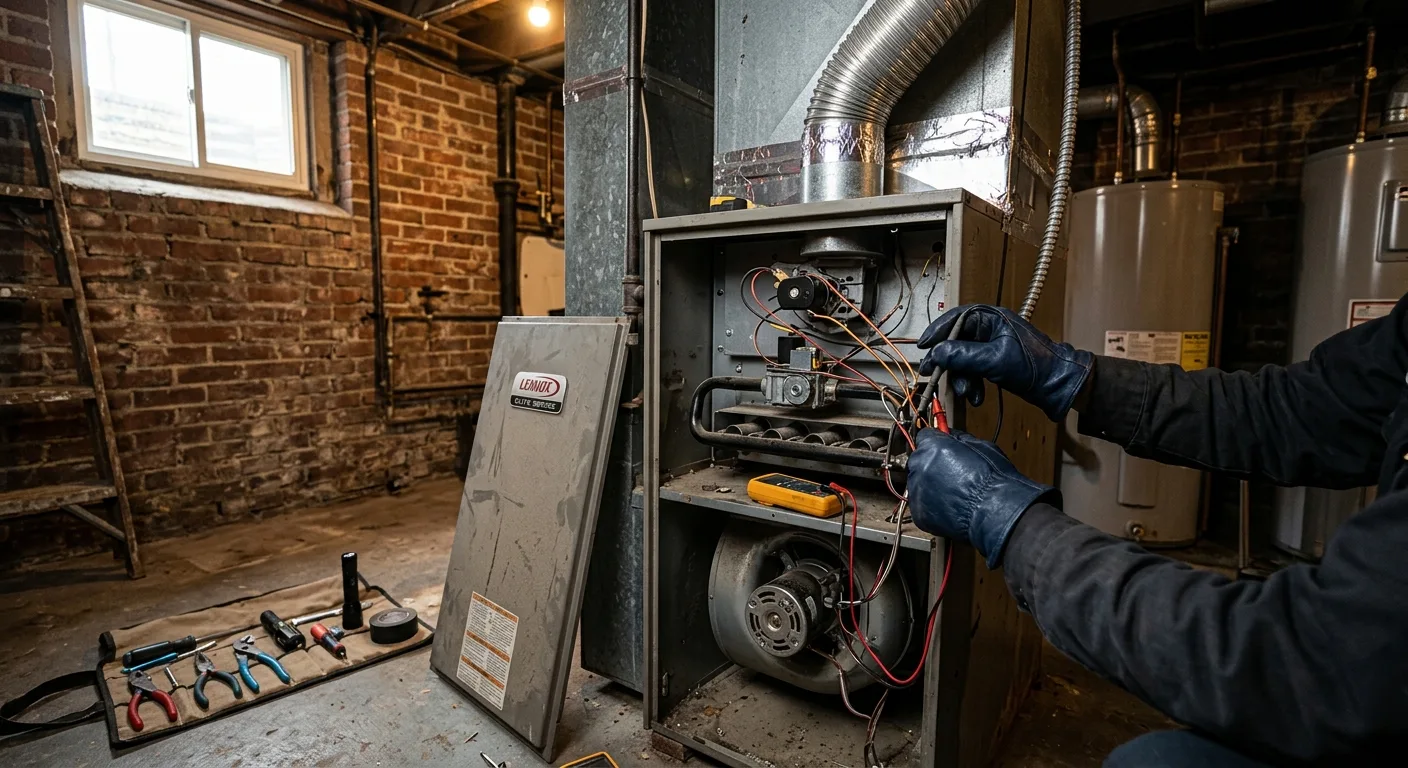
The technician listens to what you noticed, then watches the furnace try to run. Watching a full startup cycle tells us a lot: whether the inducer starts, whether the igniter glows, whether the burners light and stay lit, and when the blower comes on. If the cycle stops, the step where it stops narrows the fault to a handful of parts. We test those parts with meters rather than replacing them on a hunch, then make the repair and run the furnace through several complete cycles. Before we leave, we check the flame, the venting and the temperature rise across the heat exchanger to confirm the system is heating safely. Our main furnace repair page explains these components in more detail. If the repair needs a part we do not carry, we explain what it is, how the furnace can be run safely in the meantime if at all, and what the next visit involves. A space heater set well away from curtains and furniture can bridge a cold night, but never use an oven or grill to heat the house.

THE OLDER-HOME FACTOR

Old Town Houses and Converted Heating Systems

Historic homes around Winchester's Old Town often hide quirks: chimney flues that once served a coal or oil boiler now venting a gas furnace, ducts routed through odd chases, or a furnace sharing space with an older boiler that still serves part of the house. These setups work, but they need a careful eye. A flue that is too large for a modern furnace, for example, can lead to condensation and venting problems. When a furnace is worn out, we can plan a furnace installation that fits the house and its venting. We also cover communities beyond Winchester, listed on our service area page.

Furnace Down in Winchester?

Licensed technicians, any hour, one rate.

Call (240) 969-4911 and tell us what your furnace is doing.

Frequently asked questions

Why does my oil furnace leave soot around the burner?
Soot means the oil is not burning cleanly. A worn or clogged nozzle, a dirty oil filter, incorrect air adjustment or a cracked combustion chamber can all cause incomplete combustion. Soot coats the heat exchanger and reduces efficiency, and heavy buildup can block the flue. Shut the furnace off if you see smoke or a lot of soot, and have the burner cleaned, the nozzle and filter replaced, and the combustion adjusted.
My propane furnace won't light. Could it be the tank?
Yes, check the tank gauge first. A nearly empty propane tank or a frozen or failing regulator can stop the furnace from getting enough gas to light. If other propane appliances like a stove or water heater also struggle, the supply is the likely problem, and you should call your propane supplier. If gas supply is fine, the furnace igniter, flame sensor or gas valve may be at fault.
Is it normal for my furnace to run constantly during a cold snap?
Long run times are normal when outdoor temperatures drop sharply, especially overnight. A furnace sized for typical winter weather may run almost continuously on the coldest nights. That is fine as long as the house holds a comfortable temperature. If it runs nonstop and the house still gets colder, look at the filter, check that registers are open, and call a technician to check airflow, burner operation and whether the furnace is short on capacity.
What is the difference between a furnace and a boiler in an older Winchester home?
A furnace heats air and pushes it through ducts to vents in each room. A boiler heats water and sends it as hot water or steam to radiators or baseboard units. Many older Winchester homes started with a boiler, and some later added a furnace for an addition or central air. We repair both and can tell you which one serves which part of the house.
Do I need a carbon monoxide detector if I have an oil or gas furnace?
Yes. Any home with fuel-burning appliances, including oil, propane and natural gas furnaces, should have carbon monoxide alarms on every level and near bedrooms. Carbon monoxide is odorless, and a cracked heat exchanger or blocked flue can release it without obvious signs. Test the alarms monthly and replace them according to the manufacturer's date. If one sounds, get outside and call for help before investigating.

Tell us about the job

Your name, your number and what needs doing. A person from Brick Street Plumbing Heat & Air gets back to you.

  • Send the basicsYour name, your number and what needs doing. Three fields, about a minute.
  • A person gets back to youSomeone from Brick Street calls or texts you within one business day.
  • We book a time that suits youYou get a time that fits your day, and no obligation until you say go.
Rather talk now?(240) 969-4911Open 24/7, same rate any hour

Request an estimate

Takes about a minute

No obligation · Responds within 1 business day


By submitting this form you agree that we may contact you about your request and share your name and email address with partner companies for email marketing. We never share your mobile number or text message consent with third parties or affiliates for marketing or promotional purposes.